-min.png)
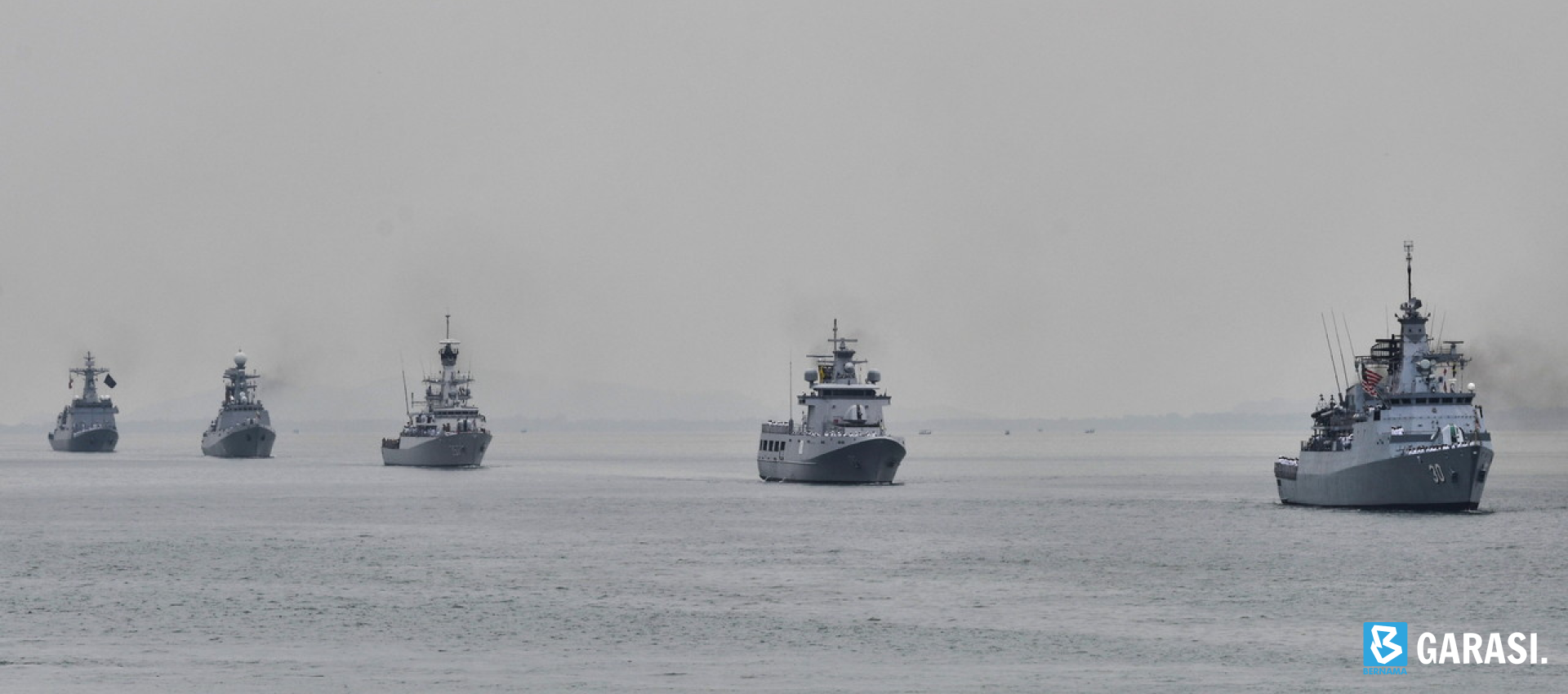
Malaysia’s Ageing Fleet Faces a Tougher Maritime Landscape
Report by: Sakina Mohamed
Data visualisation: Shaza Al Muzayen
Design & layout: Ummul Syuhaida Othman
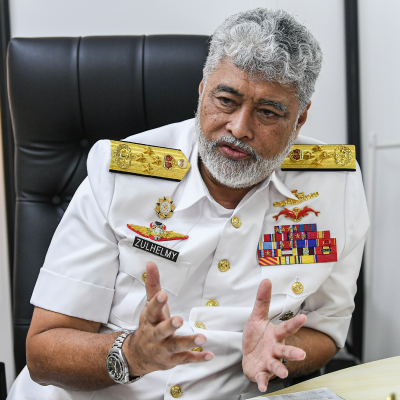
KUALA LUMPUR, May 8 (BERNAMA) – The Royal Malaysian Navy recently turned 92. And apparently, much of its fleet is already halfway there.
“More than half of our ships are over 40 years old. But because of the maintenance culture of the Navy, we are still operating,” said the Navy Chief, Admiral Tan Sri Zulhelmy Ithnain.
But the technology on these assets is fast becoming obsolete.
“It’s getting more and more difficult to maintain. At this point, you are paying more for corrective maintenance than preventive maintenance,” he told Bernama in an exclusive interview.
For a navy tasked with securing one of Southeast Asia’s most strategically exposed maritime domains, the strain is no longer easy to absorb.
“Geographically, Malaysia is unique. It is two big chunks of land divided by a huge amount of water. Our maritime border is twice that of the land border,” Zulhelmy said.
That reality places the Navy at the centre of national security.
“Being a maritime nation means that the Navy plays a very important role in ensuring that the maritime domain is being protected, the sovereignty is being upheld. You need a credible Navy to do it.”
And over time, the force has expanded its reach. It has now evolved from a brown-water navy confined largely to regional waters into one with broader blue-water capabilities.
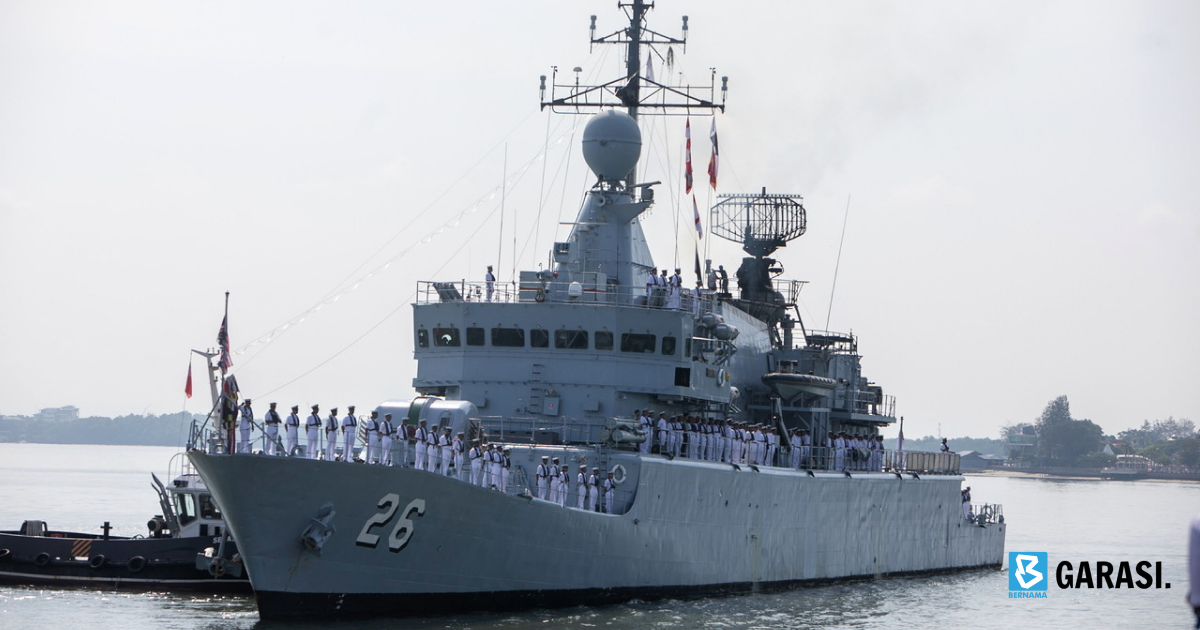
The Navy has managed to keep to the task by keeping its ageing vessels operational and mission-ready through discipline, experience and careful maintenance. But Zulhelmy made clear that this is not a long-term solution.
“The government needs to give us the tools to ensure that we are able to undertake this task.”
And the government has acknowledged these challenges. About 80 percent of procurement deals for the Malaysian Armed Forces signed during the recently concluded Defence Services Asia (DSA) and Natsec Asia 2026 were for the Navy.
While the transition is already underway, it is at a pace shaped by funding constraints and competing priorities.
Defence spending, Zulhelmy noted, competes with other national priorities. The push to upgrade the fleet comes against a backdrop of limited defence spending.
Malaysia’s allocation over the years has remained relatively modest, at around one per cent of gross domestic product (GDP).
“We understand that there are a lot of other things to be considered by the government. Defence, I think, falls into the third or fourth biggest chunk of budget allocation every year. But it barely goes beyond one percent of the GDP in recent years.
“This is a small amount compared to other nations. Some nations spend 2.5 percent (of their GDP). We are asking for 1.5 percent," he said.
Despite the restrained budget, Zulhelmy says the Armed Forces was still able to strengthen key defence capabilities.
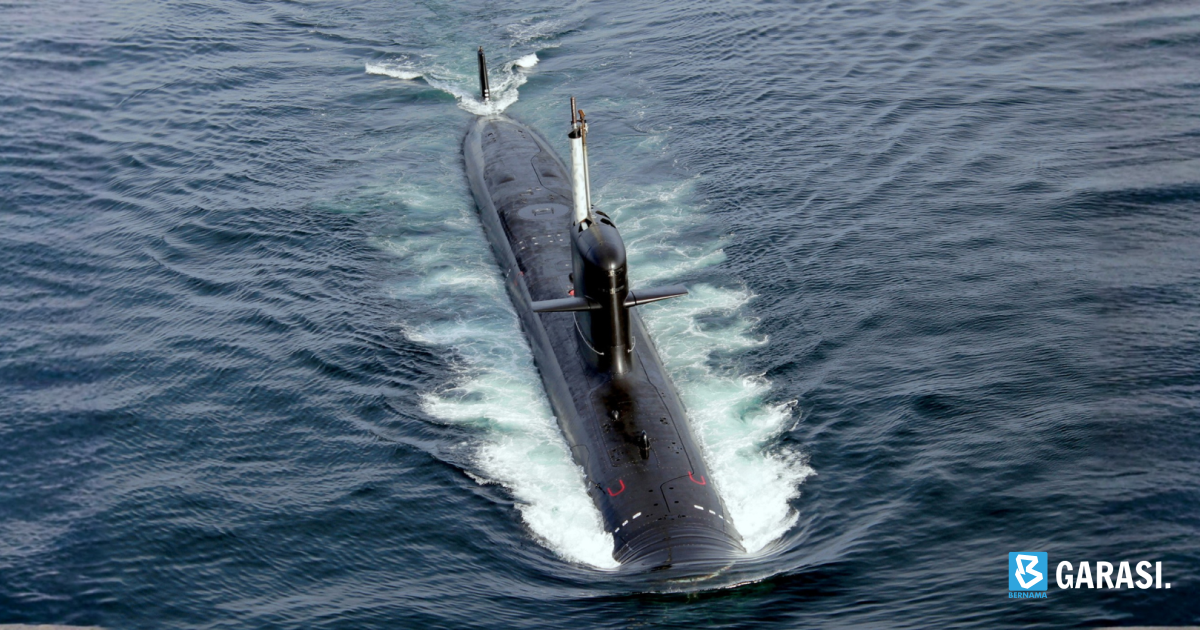
“We are still able to procure fighter jets. We are able to procure submarines. We are able to get a lot of equipment. This is despite a very small allocation.
“But the task at hand is getting incredibly difficult, especially with whatever is going on around us,” he said, referring to the global supply crisis. “So I hope that the government will reconsider our asking for an increase in the budget, so that we can actually do more.”
At the same time, he acknowledged the broader pressures facing Malaysians. It is not always easy to argue for ships and systems when households are thinking about fuel and food.
“Looking at the current situation on the ground, people are more worried about putting food on the table,” he said.
Still, he warned against delaying investment in defence.
“If you are not prepared to defend what we have today, we are not going to be able to do it later.”
The Navy’s dependence on foreign systems has also highlighted the challenges of operating in an increasingly fragmented global defence environment.
Recent issues involving the Littoral Combat Ship programme – including missile supply arrangements involving foreign original equipment manufacturers – have underscored how geopolitical uncertainty and supply-chain disruptions can directly affect Malaysia’s military modernisation plans.
At the same time, newer naval programmes have seen Malaysia broaden its defence partnerships, including deeper integration with Turkish defence systems, reflecting a wider effort to diversify strategic dependencies beyond traditional Western suppliers.
For Zulhelmy, however, Malaysia’s non-aligned approach remains central to how the Navy manages those realities.
“The government’s stand is always to de-escalate, defuse. This is what we stand for.”
That philosophy extends beyond diplomacy and shapes how Malaysia manages its defence relationships.
Zulhelmy said reliance on international partners was necessary given the limited resources of a relatively small country like Malaysia.
That cooperation spans multiple countries, including major powers with competing interests.
“We work together with many other countries, including China, because we are non-aligned. We’re friends with everyone,” he added.
Still, Zulhelmy stressed that restraint remains the guiding principle.
“War is actually the last resort. If we go to war, it means that all other efforts have failed.
“The Armed Forces is like an insurance policy. You pay for something that you hope never to use.”
-- BERNAMA